


Decoding Your Pet's Body Language for a Stronger Bond

Your pet is talking all day, even when they never make a sound. A slow blink, a tucked tail, a sudden freeze, a playful bow, or a sideways glance can tell you whether they feel safe, stressed, curious, excited, or ready for space.
Learning those signals does more than satisfy curiosity. It helps prevent bites and scratches, lowers stress at home, makes training easier, and builds trust. When pets feel understood, they do not have to “shout” with growls, hisses, barking, swats, or hiding.
This guide focuses mostly on dogs and cats, with a few notes that apply to many companion animals. Every pet is an individual, so the goal is not to memorize one perfect chart. The goal is to watch the whole body, read the situation, and respond with care.

Body language works like a full sentence
A wagging tail does not always mean a happy dog. A purring cat is not always content. One signal by itself can mislead you.
Think of body language as a sentence. The “words” are the ears, eyes, mouth, tail, posture, movement, and sounds. The “grammar” is the situation. A dog wagging loosely when you come home is different from a stiff dog wagging while staring at another dog. A cat purring in your lap is different from a cat purring at the veterinary clinic.
The three most useful questions are:
What is the whole body doing?
What just happened before this behavior?
Did the signal soften, grow stronger, or change?
A pet who feels safe often looks loose. Their muscles are relaxed. Their eyes are soft. Their breathing is steady. Their movements are smooth.
A pet who feels worried often looks tight. Their body may freeze, crouch, lean away, or become unusually still. Their pupils may widen. Their mouth may close. Their ears may shift back or rotate. They may lick their lips, yawn, turn their head away, or avoid eye contact.
Those small signs matter. Many pets give polite, quiet signals before they use louder ones. When those early requests are ignored, they may escalate.
The friendliest response to body language is often simple: give the pet more choice, more space, or a calmer pace.
What a relaxed pet usually looks like
Relaxed body language is the foundation. Once you know your pet’s normal calm state, it becomes much easier to spot stress, excitement, fear, pain, or overstimulation.
For many dogs, comfort looks like a soft body with gentle curves. The tail may rest naturally or wag in loose, sweeping motions. The face looks open. The mouth may be slightly open, with relaxed lips. The ears sit in their natural position. The dog may approach with wiggly movement, sniff, then choose to stay near you.
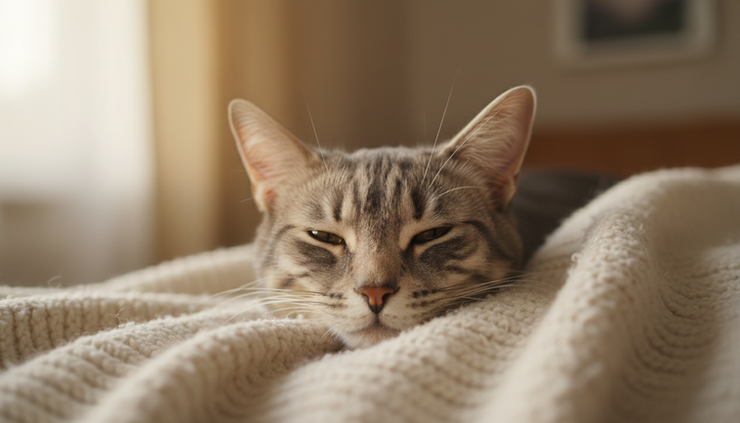
For many cats, comfort looks quieter. A relaxed cat may stretch out, loaf with paws tucked, blink slowly, or rest with ears facing forward or slightly to the side. A confident cat may walk with the tail up, sometimes with a small hook at the tip. A cat who rubs their cheeks or body against you is often leaving familiar scent and showing social comfort.
Here are common comfort signals, with the reminder that your pet’s breed, age, body shape, and history can change how these look.
Signal | Often means | What to do |
Soft eyes | Comfort or trust | Keep interactions gentle and predictable |
Loose posture | Low tension | Invite engagement, but let the pet choose |
Slow blink in cats | Calm social signal | Blink slowly back and avoid staring |
Wiggly dog body | Friendly excitement | Reward calm greetings before jumping starts |
Resting near you | Social comfort | Let closeness happen without grabbing |
Relaxed does not always mean ready to be touched. Some pets like being nearby but do not want petting. Others enjoy petting for a short time, then need a break. A strong bond grows when closeness comes with consent.
A good habit is to use a three-second petting test. Pet your dog or cat in a spot they usually enjoy for about three seconds, then pause. If they lean in, nudge your hand, stay loose, or reengage, they may want more. If they look away, shift back, lick their lips, twitch their tail, or leave, respect the answer.
Stress signals are often quieter than people expect
Many pet owners notice the big signals, such as barking, growling, hissing, biting, scratching, or running away. The earlier signs are easier to miss.
A stressed dog may:
Turn their head away
Show the whites of the eyes
Lick their lips when no food is present
Yawn outside of a sleepy context
Pin or pull back the ears
Tuck the tail or hold it stiff
Lift one paw
Pant when not hot or tired
Freeze
Move in slow, cautious steps
A stressed cat may:
Crouch low to the ground
Flatten or rotate the ears
Widen the pupils
Flick or thump the tail
Hide under furniture
Hold the whiskers back or tense
Avoid touch
Growl, hiss, or swat
Overgroom in repeated patterns
These signals do not mean your pet is “bad.” They mean your pet is having a hard time. The right response is to lower pressure.
If a dog freezes when a stranger reaches over their head, ask the person to stop. If a cat’s tail starts twitching during petting, pause before the cat swats. If a puppy yawns and turns away during a busy family gathering, create a quiet rest area.
Stress also depends on distance. Many pets can handle something from across the room but not right next to their face. That “something” might be a vacuum, another animal, a visitor, a child, a loud appliance, or a new object.
One useful rule is to watch for recovery time. A pet who startles, then quickly softens, sniffs, or returns to normal may be coping well. A pet who stays tense, hides for a long time, refuses food, or keeps scanning the room needs more support.
If sudden behavior changes appear, especially hiding, aggression, trembling, appetite loss, or sensitivity to touch, check with a veterinarian. Body language can reflect pain or illness as well as emotion. This article is for general education and cannot replace medical care.
Playful, excited, and overstimulated can look alike
Play is one of the best parts of living with pets. It also creates confusion because fun can tip into too much intensity.
A playful dog may bow with front legs down and rear end up. The body looks loose and bouncy. Movements may be exaggerated. They may pause, shake off, return, and invite more. Healthy dog play includes role changes, little breaks, and loose curves rather than constant chasing or pinning.
A playful cat may stalk, pounce, bat toys, wiggle before jumping, or chase short bursts. The ears usually stay forward or neutral. The body looks focused but not panicked. Play hunting is normal for cats, and it helps meet a real need.
Excitement becomes overstimulation when the body gets tighter and the pet has trouble settling. A dog may start jumping, mouthing, barking sharply, spinning, or grabbing clothing. A cat may bite during petting, attack ankles, thump the tail, or switch from relaxed to intense in seconds.
This is where timing helps. Stop before your pet loses control, not after.
Try these calming shifts:
Use shorter play sessions with breaks.
Trade rowdy play for sniffing, licking, chewing, or puzzle toys.
Keep greetings low-key until your pet’s body softens.
For cats, use wand toys instead of hands.
End play with a small treat scatter or quiet routine.
The goal is not to remove excitement. Joy is healthy. The goal is to help your pet move back down from high energy without fear, punishment, or confusion.

Tail, ears, and eyes need context
The tail gets a lot of attention, but it is only one part of the message.
A dog’s tail can signal different emotions depending on height, speed, stiffness, and body posture. A broad, loose wag often pairs with friendliness. A high, stiff, tight wag may signal arousal or tension. A tucked tail can show fear, pain, or uncertainty. Some dogs have curled tails, short tails, or tails that are hard to read, so posture and face matter even more.
A cat’s tail is very expressive too. Tail up often suggests confidence or friendly interest. A puffed tail shows high arousal, often fear or surprise. A low, tucked tail can show worry. A lashing or thumping tail often means irritation or overstimulation. If a cat’s tail starts moving faster while you pet them, take the hint early.
Ears also vary by breed and anatomy. A German shepherd’s ears show movement clearly. A floppy-eared dog may show tension through the base of the ears instead. Cats often rotate their ears toward sounds, but flattened ears usually mean stress, fear, or defensive arousal.
Eyes can be even more telling. Soft eyes suggest comfort. Hard staring can be a threat or a sign of intense focus. Wide eyes can mean fear, excitement, or surprise. Direct eye contact can feel friendly to people but rude or scary to some animals.
For dogs, watch for a side-eye look where the whites of the eyes show. Many trainers call this “whale eye.” It often appears when a dog feels uncomfortable, such as when guarding a chew, being hugged, or feeling cornered.
For cats, slow blinking can be affiliative, while a fixed stare with a tense body can be a warning. Squinting can signal relaxation, but it can also suggest eye discomfort if it appears suddenly or with discharge.
Context decides the meaning. A cat with wide pupils during toy play may be excited. The same pupils at the clinic may show fear. A dog panting after fetch may be cooling down. Panting in a quiet room during fireworks may show stress.
Better communication starts with your response
Understanding body language only helps if it changes what happens next. Pets learn from the way people answer them.
If you notice calm signals, reward them. Speak softly. Offer gentle attention. Let the pet keep choosing. If you notice stress signals, reduce pressure. Move away, stop touching, lower noise, block visual triggers, or guide the pet to a safe place.
Punishing warning signs can create bigger problems. A growl, hiss, or swat is communication. It says, “I need space.” If those signals get punished, the pet may learn to skip the warning next time. Respecting the warning builds safety.
A few daily habits can improve communication fast.
Narrate less and observe more
People often talk through interactions while missing the body language right in front of them. Pause and watch the ears, tail, eyes, mouth, and posture before deciding what your pet wants.
Invite instead of insisting
Pat your leg, offer your hand low and to the side, or sit nearby. Let the pet close the gap. This is especially helpful with shy pets, newly adopted animals, and pets meeting guests.
Create safe exits
A pet who can walk away is less likely to panic. Do not corner a cat for affection. Do not trap a dog between furniture and a visitor. Give beds, crates, perches, and quiet rooms real value by letting them be safe zones.
Teach children to read stop signs
Children can learn simple rules. If the pet walks away, let them go. If the pet hides, do not follow. If the pet is eating, sleeping, or chewing a special item, give space. Adult supervision matters, even with gentle pets.
Match touch to the pet
Many dogs prefer chest, shoulder, or side rubs over head pats. Many cats prefer cheeks, chin, or the base of the ears, and dislike belly rubs. Watch the answer your pet gives rather than relying on what “most pets” like.

Your pet’s personal dictionary matters most
General body language guides are helpful, but your own pet has a personal style. Some cats chirp when excited. Some dogs wag when nervous. Some senior pets move stiffly because of age. Some animals from difficult backgrounds need more time and distance before their bodies soften.
Keep a simple mental note of patterns:
What does your pet look like when fully relaxed?
Which situations make them tense?
Where do they enjoy being touched?
What signals appear right before they leave, bark, scratch, or bite?
How long do they need to recover after stress?
Over time, these patterns become your pet’s dictionary. You start to notice tiny changes, such as a closed mouth before a bark, a tail flick before a swat, or a head turn before a retreat. That awareness helps you step in earlier and more kindly.
Decoding Your Pet's Body Language for a Stronger Bond is really a practice of listening. The more accurately you read your pet, the more predictable and safe you become to them.
A stronger bond does not come from constant attention. It comes from trust built in small moments. You stop when they ask. You invite instead of force. You notice joy and make room for it. You notice stress and make life easier.
Start today with one simple habit: pause before you touch, call, pick up, or correct your pet. Look at the whole body. Ask what they are telling you. Then answer in a way that proves you heard.


Comments